Studio369 is a post-documentary practice applying operational rigor to material translation.
It operates as the translation layer of the work: framework-driven, materially grounded, and built for institutional contexts. The practice evolved from documentary photography into material transformation — moving from photographs as endpoints to photographs as raw material.
Studio369 is the translation layer of Castro's post-documentary practice. It transforms photographic documentation into material artifacts — installations, textile works, and editioned objects.
Rather than preserving images as fixed representations, Studio369 treats materials as active carriers of historical memory. Images migrate across substrates. Materials carry stress. Objects retain record.
The practice is governed by the RAID Framework — Resilience, Adaptation, Impermanence, Detachment — a methodology for translating lived experience into material form.
Castro's installations extend beyond photographic representation into sensory experience, using alternative processes including cyanotype, dye sublimation, and grana cochinilla (cochineal dye) — creating layers of historical reclamation and material storytelling.
His work has been exhibited internationally and presented in institutional and exhibition contexts, including the Museo Morelense de Arte Contemporáneo Juan Soriano (Cuernavaca, México), KOIK Contemporary (Mexico City), and the Harvey Milk Photo Center (San Francisco). These installations position documentary images within physical space, allowing viewers to encounter them as structural and environmental conditions rather than isolated visual records.
Studio369 serves as the institutional, archival, and commercial platform for Castro's material practice, operating as an exhibition surface, artifact registry, and framework for the preservation and presentation of installation-based and object-based work.
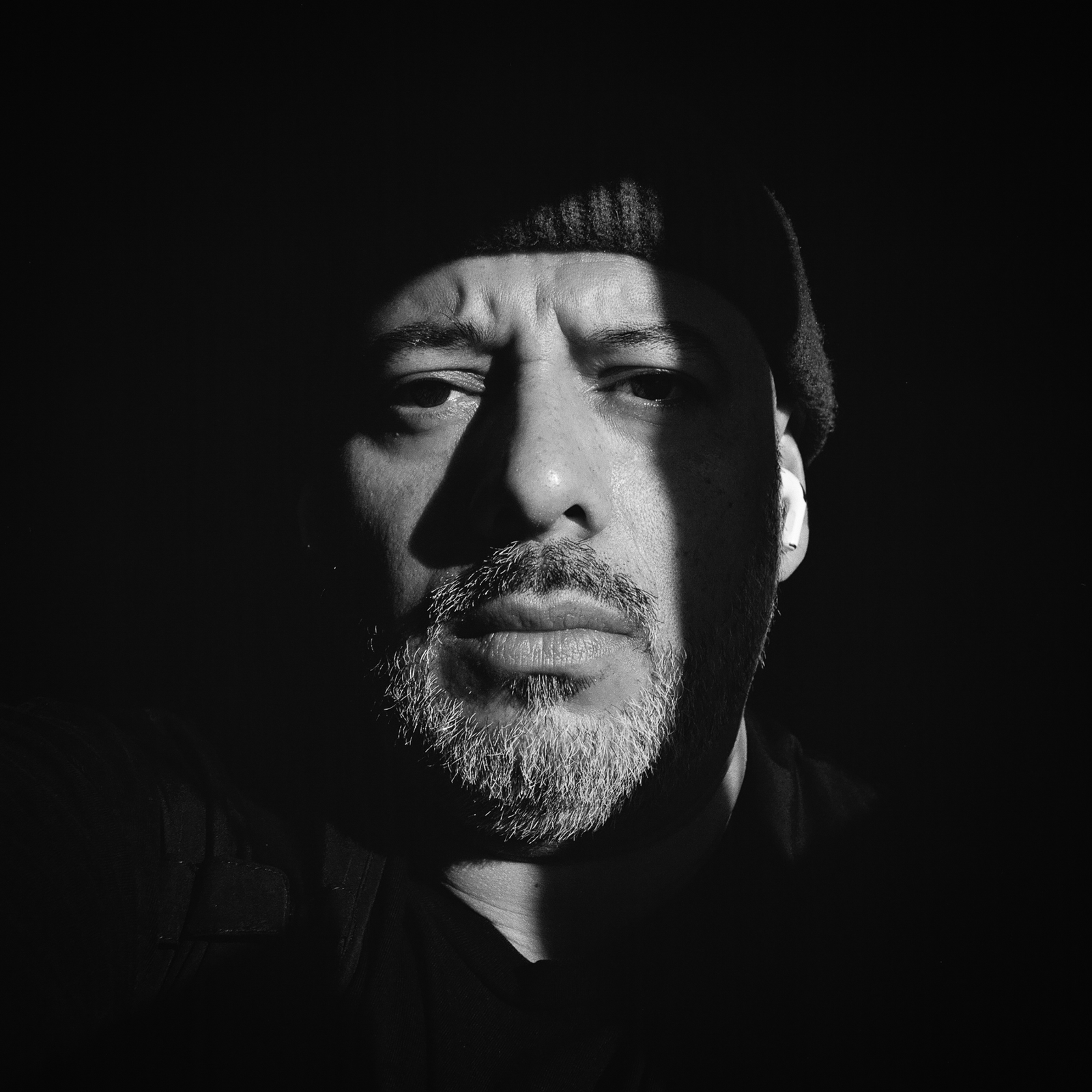
Harvey Castro worked in enterprise operations for 20 years. From 2002 to 2018, he led supply chain and software deployments across three industries: inventory and warehouse management (SmartTurn/RedPrairie), enterprise resource planning systems (RedPrairie), and logistics optimization (DiCentral). Hundreds of production deployments. Integration decisions. System audits under regulatory constraint.
What that taught him: systems don't fail from single failures. They fail from cascading constraints. Efficiency measures that solve one problem create downstream vulnerabilities. Documentation matters more than speed. Infrastructure is invisible until it breaks.
In 2018, Castro transitioned to documentary photography, documenting communities navigating disaster recovery and displacement — primarily in Puerto Rico following Hurricane María and across Central America. That focus has earlier roots: in February 2006, while driving cross country from New Hampshire to California, he first encountered Gulf Coast communities still living in Katrina's aftermath. That work is documented in Remnants of Katrina ↗︎.
In 2022, during a residency at Casa Lu in Mexico City, Castro began translating documentary photographs into material form. Cyanotypes. Textile transfers. Installations. Not representation. Evidence.
This marked a shift: photography was no longer the endpoint. Photographs became raw material for understanding how systems produce impermanence, displacement, adaptation, and resilience. Each material translation is a forensic act.
His documentary work lives on harveycastro.co ↗︎. Recognition: MMACJS Juan Soriano (Cuernavaca), CENTER Santa Fe (Multimedia Storytelling Award), Belfast Photo Festival (shortlist), YBCA Creative Corps Fellowship, Casa Lu residency (CDMX). UC Berkeley Graduate School of Journalism, Advanced Media Certificate (2019). Bilingual (English / Spanish). Based in Oakland, CA.
”Images migrate across substrates. Materials carry stress. Objects retain record.”