Lluvia
de sangre.
Four installations of Guatemalan communities reshaped by hurricanes intensified by climate change. The room is named for the rain that fell on Queja — the rain that Hurricane Eta brought, which triggered the landslide, and the ceremonial rain the Maya highlands answered it with in the months that followed.
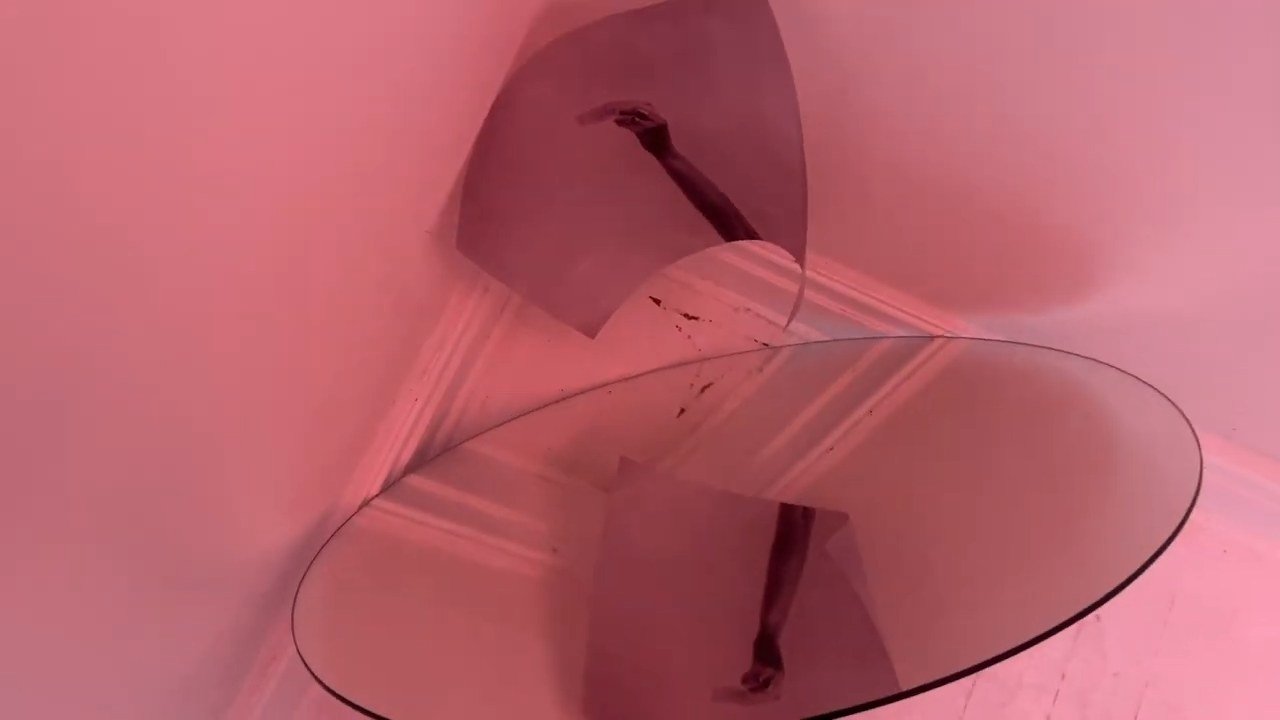
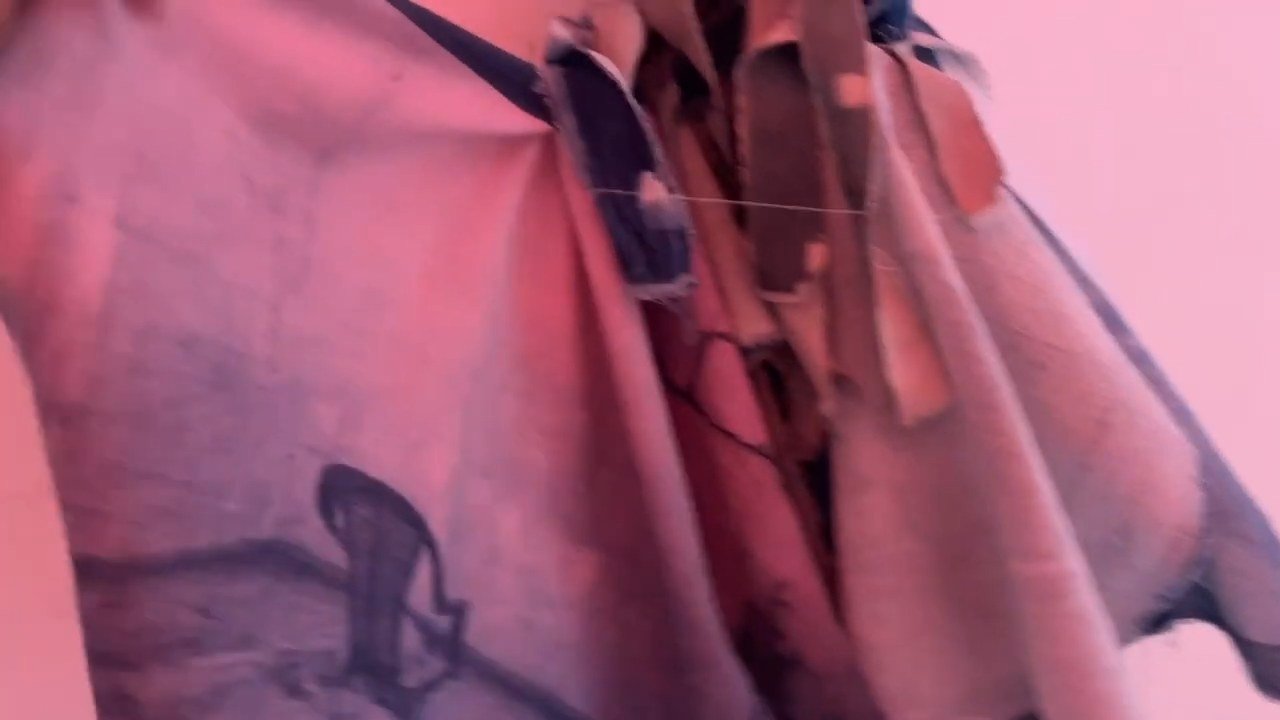
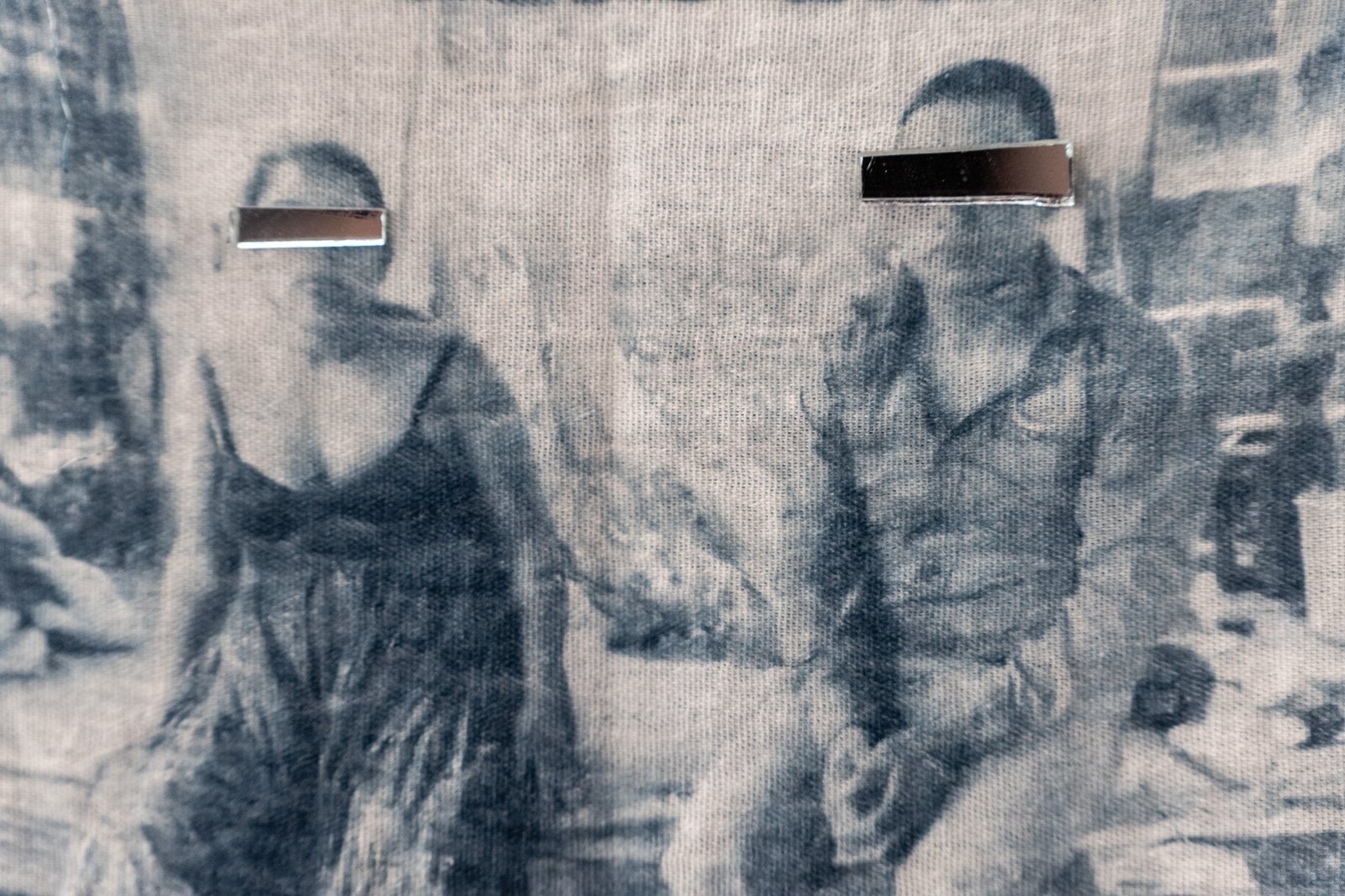
Two of the four works were suspended from a single point — the fabric folding into itself, hiding the image inside. To see the photograph, the scene, the face, the viewer had to reach in, open the cloth, move around it. The encounter was not passive: the body made contact with the material before the image became legible. Multiple forms of connection — with the cloth, with the history it carries, with the human consequences it documents.
The room was lit red — a deliberate shift in emotional register from the blue light of Para acá también vive gente that preceded it. The body arrived changed before the work was even visible.
Prints on vellum introduced a second register of depth — hung in layers, the translucent sheets caught and diffused the red light, casting overlapping shadows that shifted with the viewer's movement. Transparency as dimension: the image beneath legible through the image above.
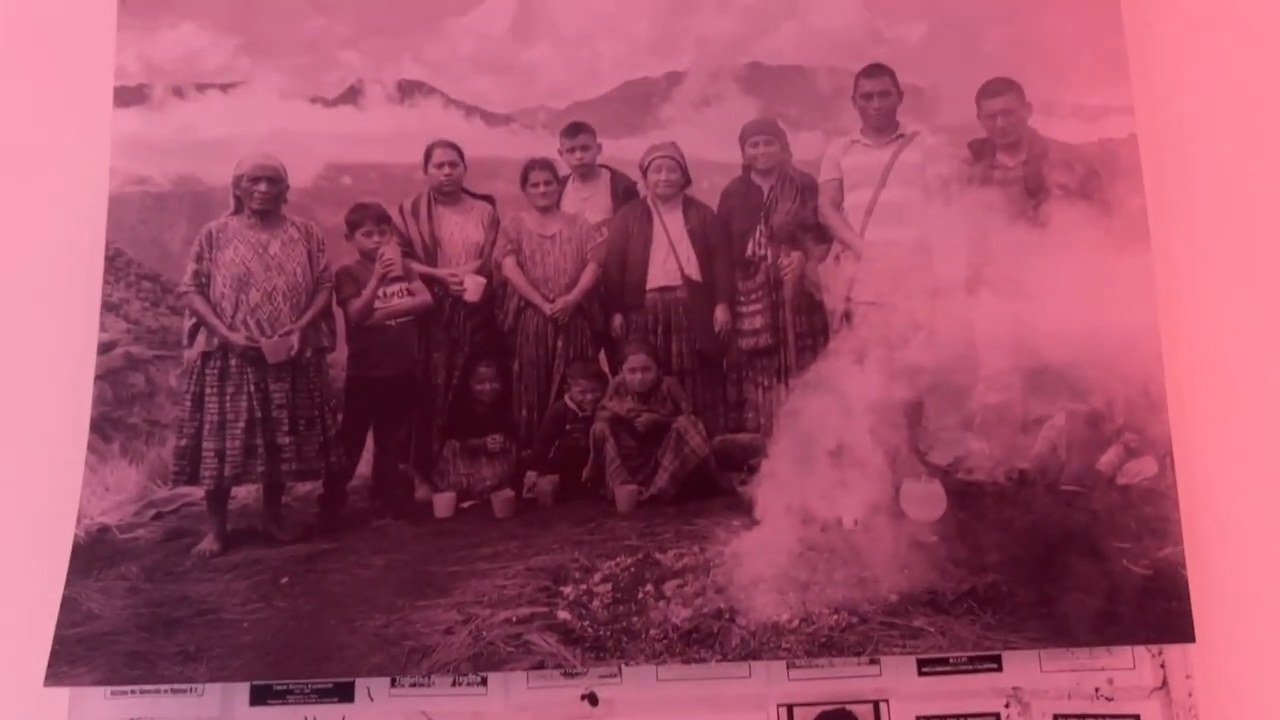
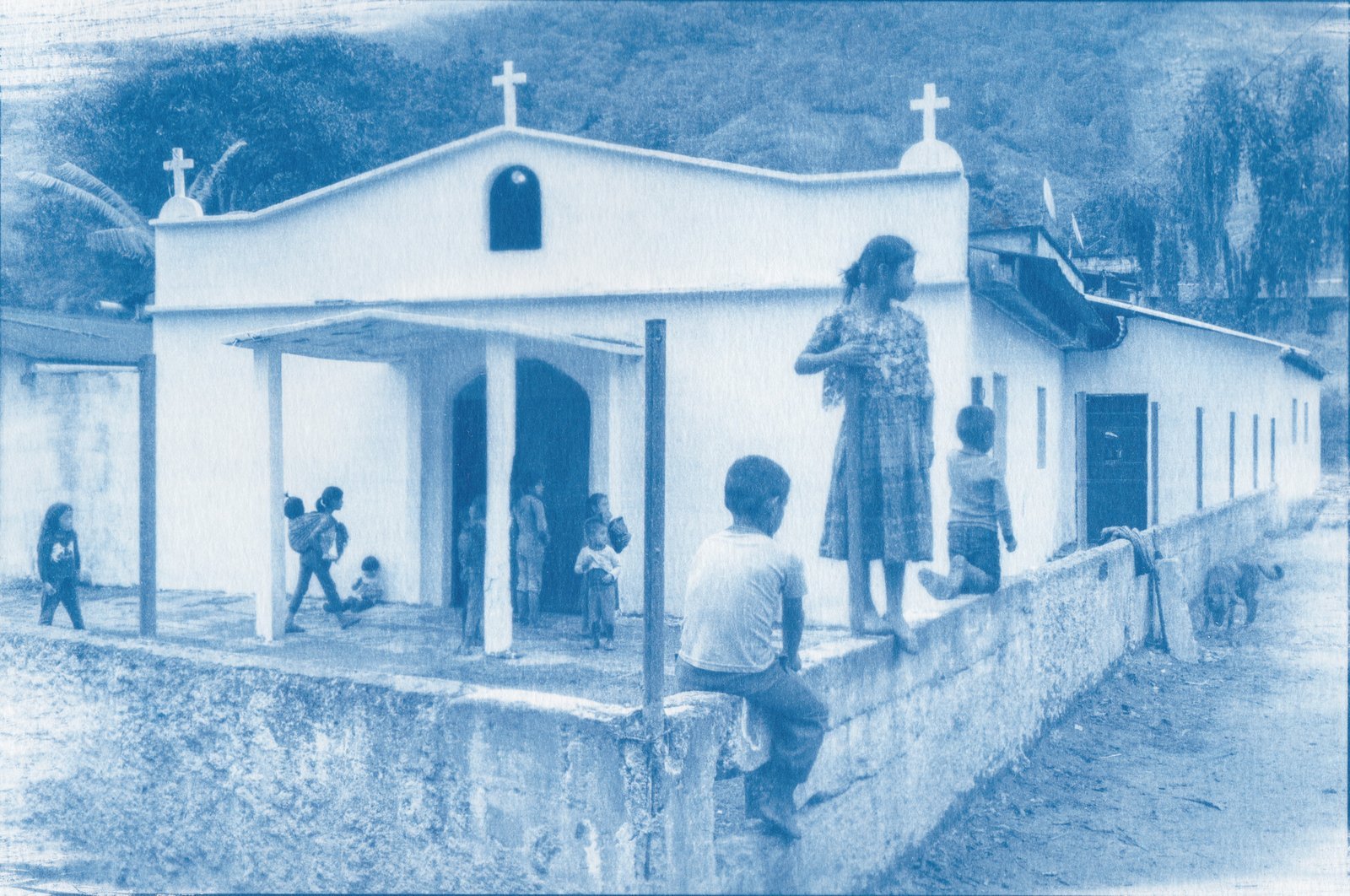
The cyanotype textiles hang as a procession: portraits of the community, of ceremony, of the village after, of the congregation gathered in smoke. Print becomes cloth becomes shroud becomes flag. Source material from the Los Olvidados · Guatemala ↗︎ documentary chapter.
The rain, the cloth,
the procession.
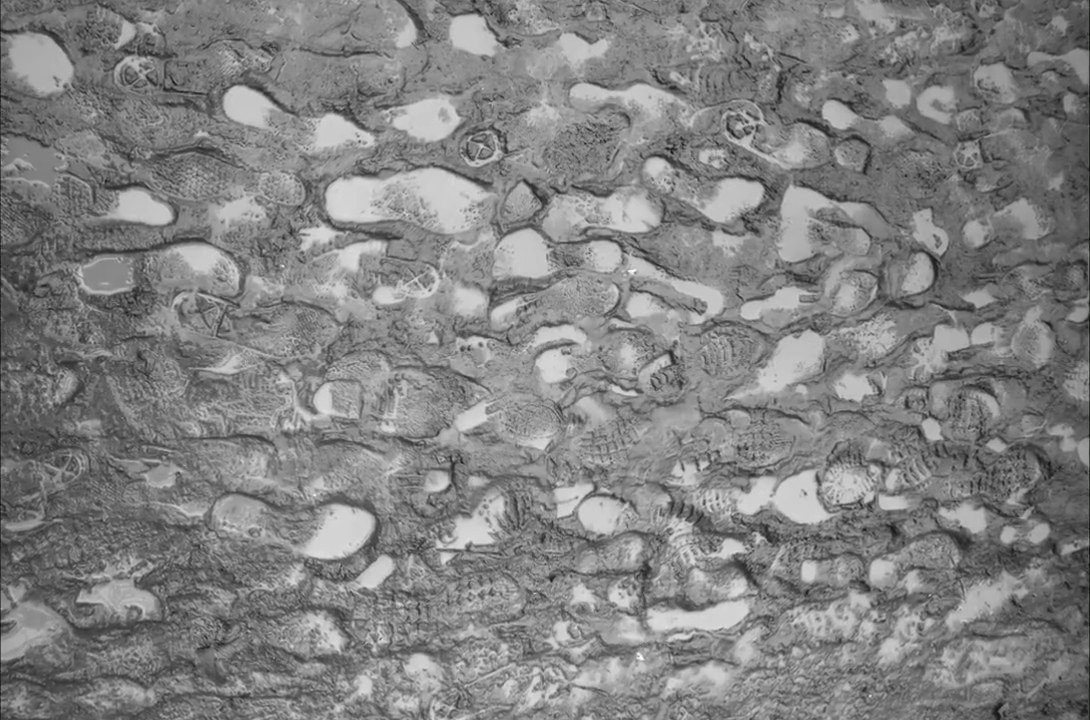
Queja, the highlands,
in moving image.
Cotton textile, coated in cyanotype chemistry and printed in direct sunlight. The cloths are hung in procession rather than framed — to be read like flags, like shrouds, like the cloth itself moving. Selected works were also printed on vellum — translucent sheets hung in layers, catching and diffusing the red room light to create depth through transparency and overlapping shadow.
Source images photographed in Queja after Hurricane Eta, in the Maya highlands during the months of recovery. Cyanotype on cotton, toned with grana cochinilla — cochineal dye from insects native to Oaxaca and Guatemala. Cochinilla was extracted by colonial powers from the very communities Castro documents. Bringing the dye back into the print is a form of visual restitution.
Unique works — the procession remains as installed, the individual cloths can travel as discrete pieces. Documentation video accompanies the work as AV01 · Los Olvidados — Guatemala.
Source material from Los Olvidados, 2018 — ongoing. Room shown in Esa sombra eres tú, KOIK Contemporary, Mexico City, 2023.
Return to the
exhibition.
Lluvia de sangre is the fourth and final room of Esa sombra eres tú. The exhibition continues elsewhere — in Cuerpo Substancia Extendida, in Quantum Memory, in the continuing Cyanotype Works.