 ← Return to work
 Los
Olvidados.
Guatemala chapter
Los Olvidados is the long-running documentary project that the rest of the practice translates from — communities across Guatemala, Puerto Rico, and the Americas navigating environmental catastrophe, displacement, and the slow violence of being economically invisible. This is the Guatemala chapter: Queja after the Eta landslide, the Maya highlands, the families that remained.
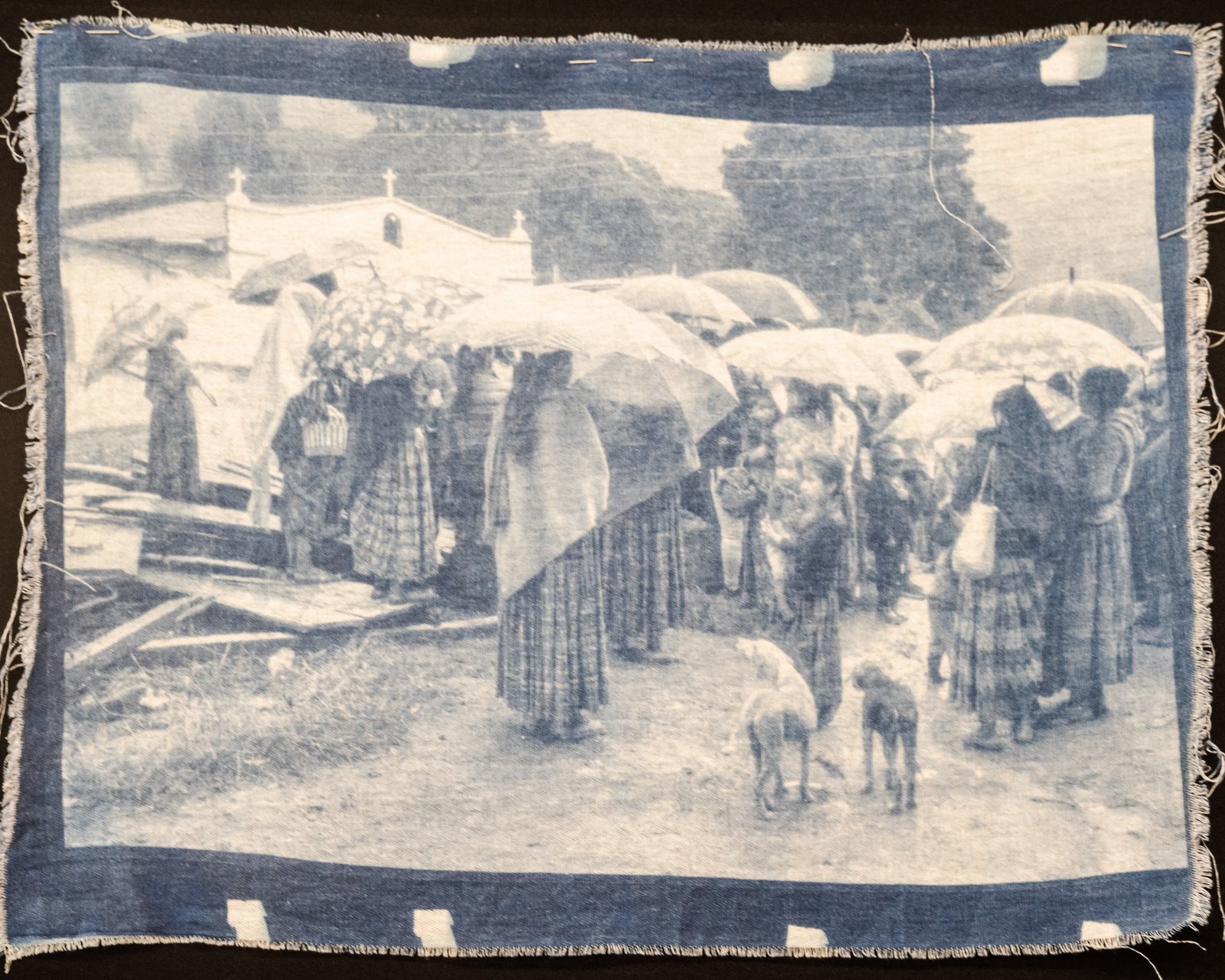
The twelve panels shown here were made during a residency at Casa Lu, Mexico City. Source images were taken in Queja and the surrounding highlands; the panels were coated, printed in direct sun, washed, and dried over the course of the residency. Each panel is a discrete cyanotype on cotton; together, mounted onto black backing, they read as a single composite document — a wall of names, places, and absences.
The wall as
a single document.
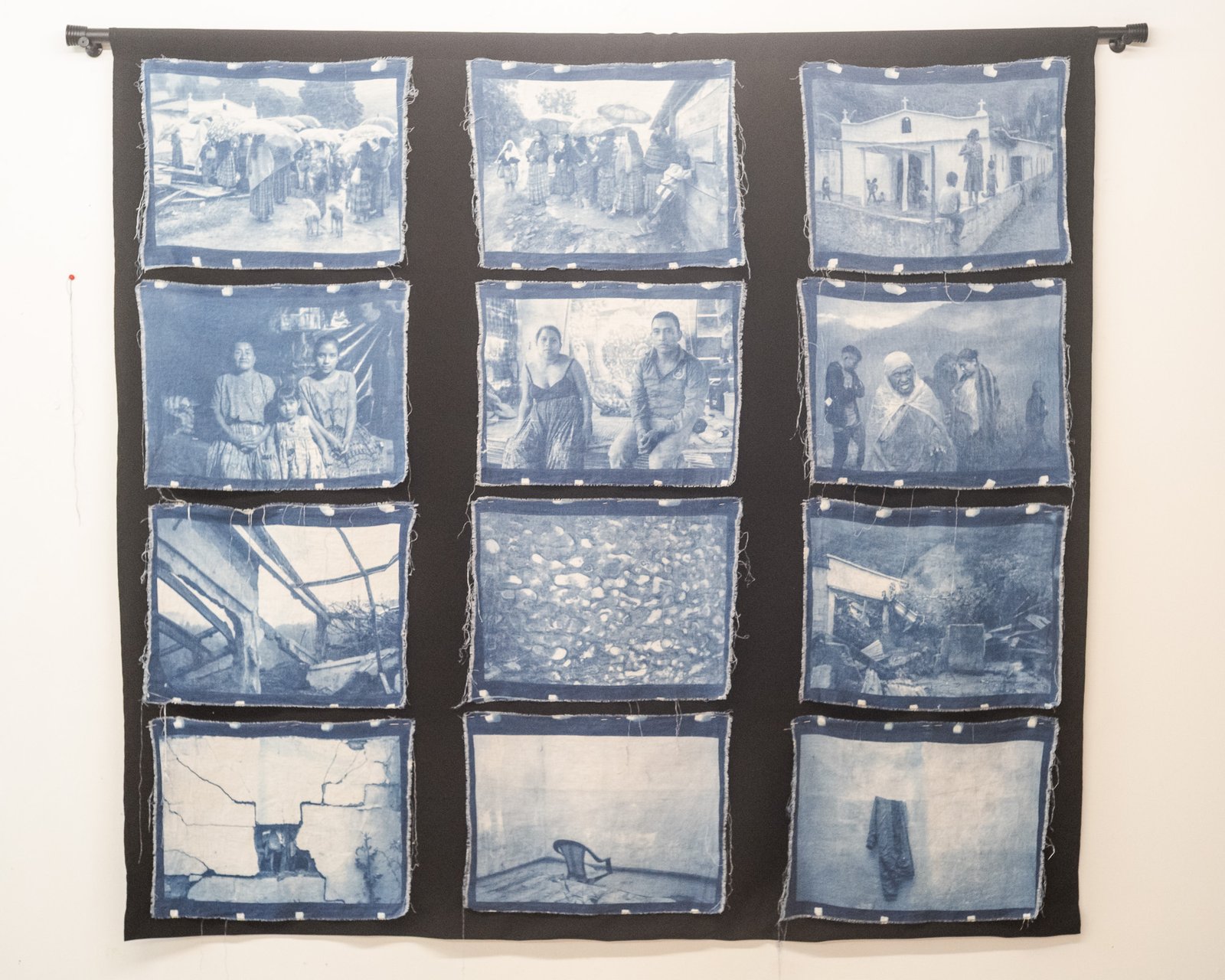
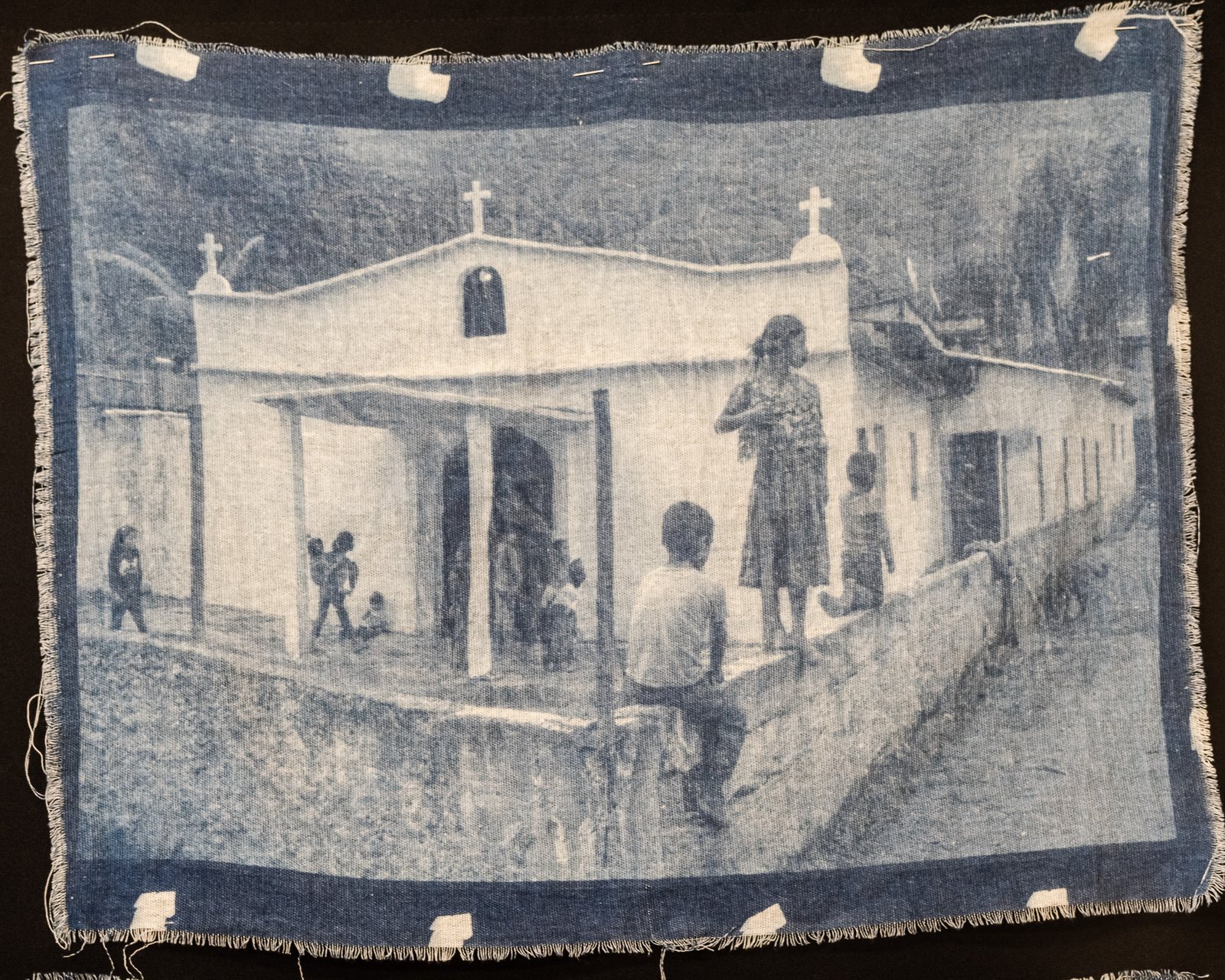
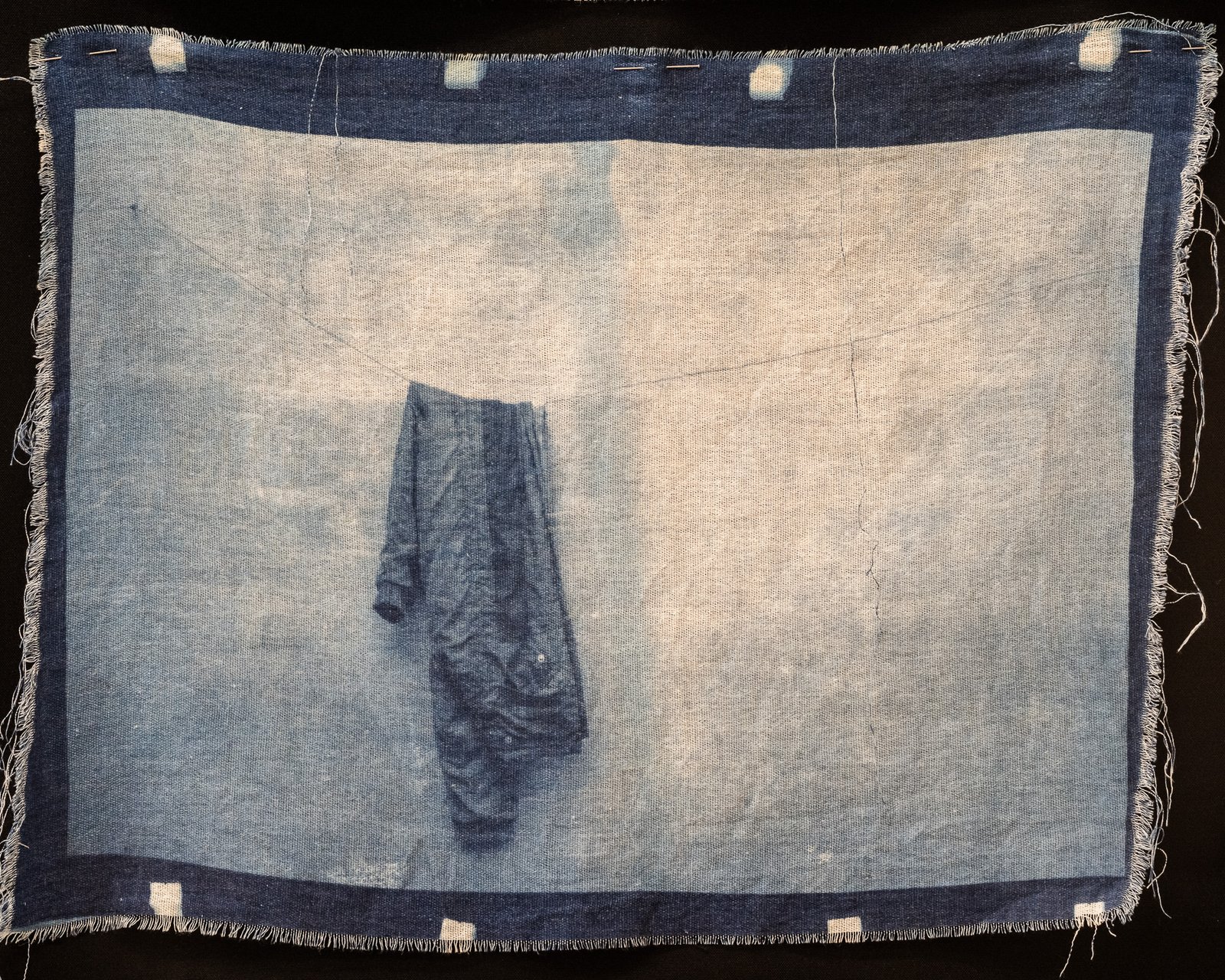
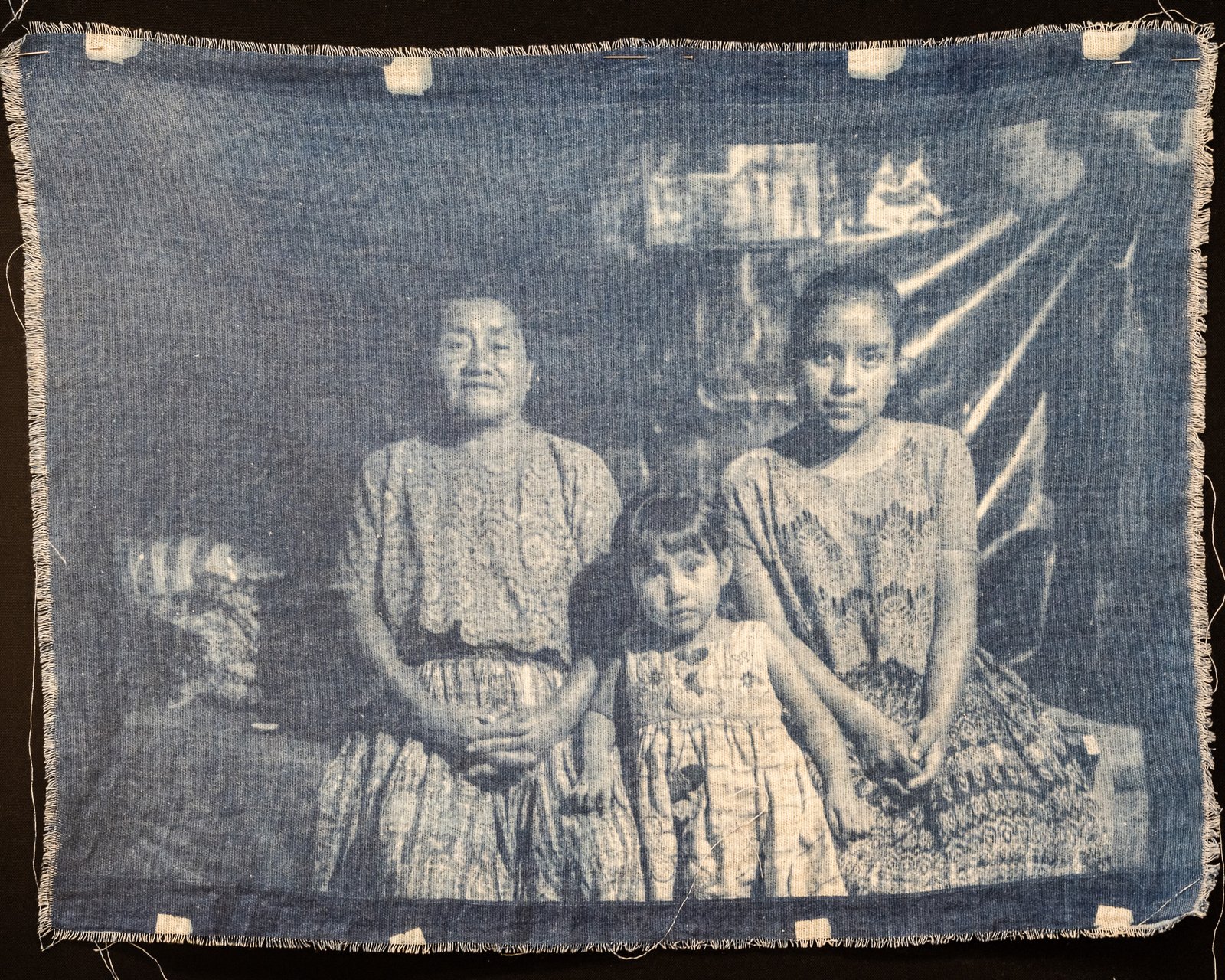
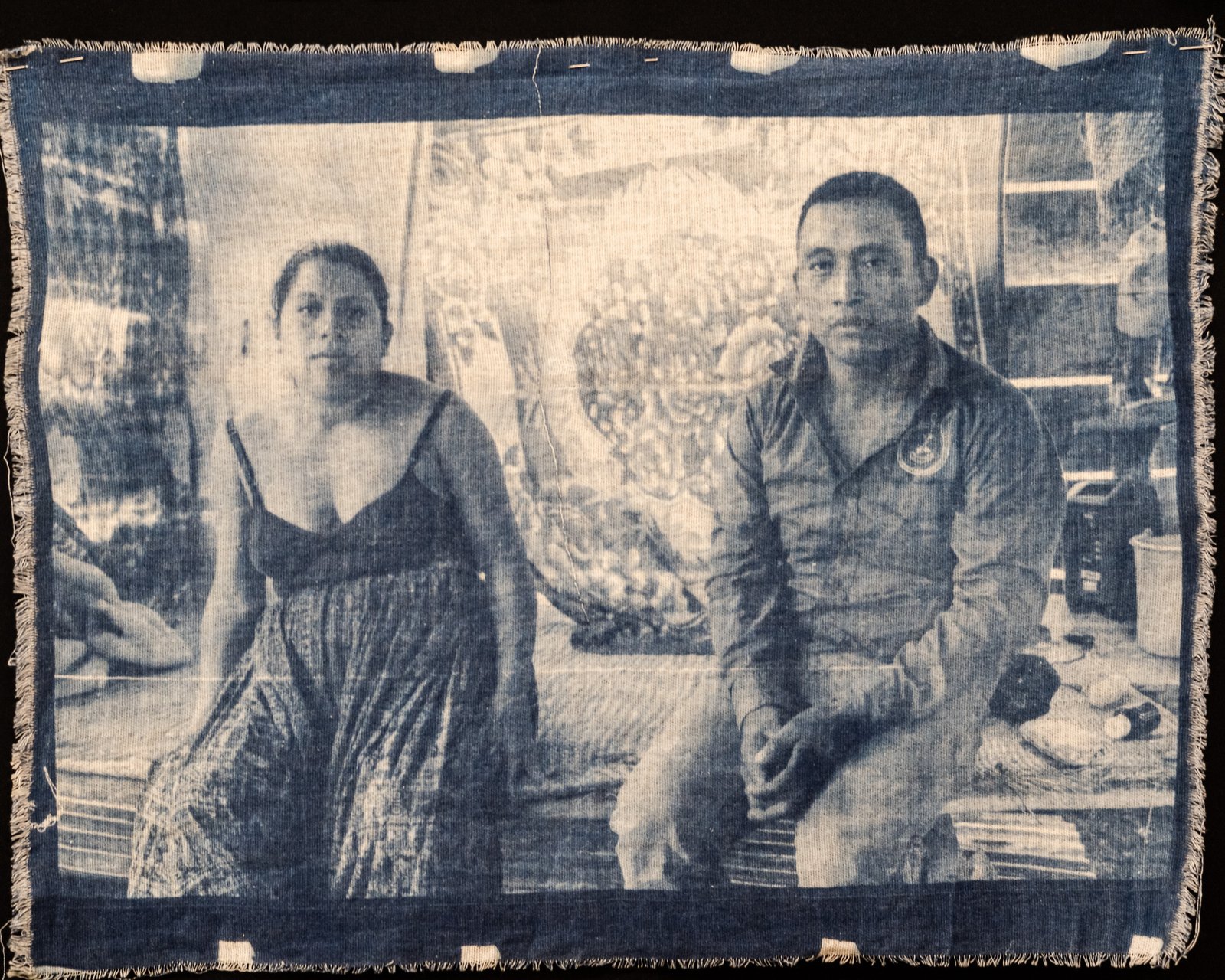
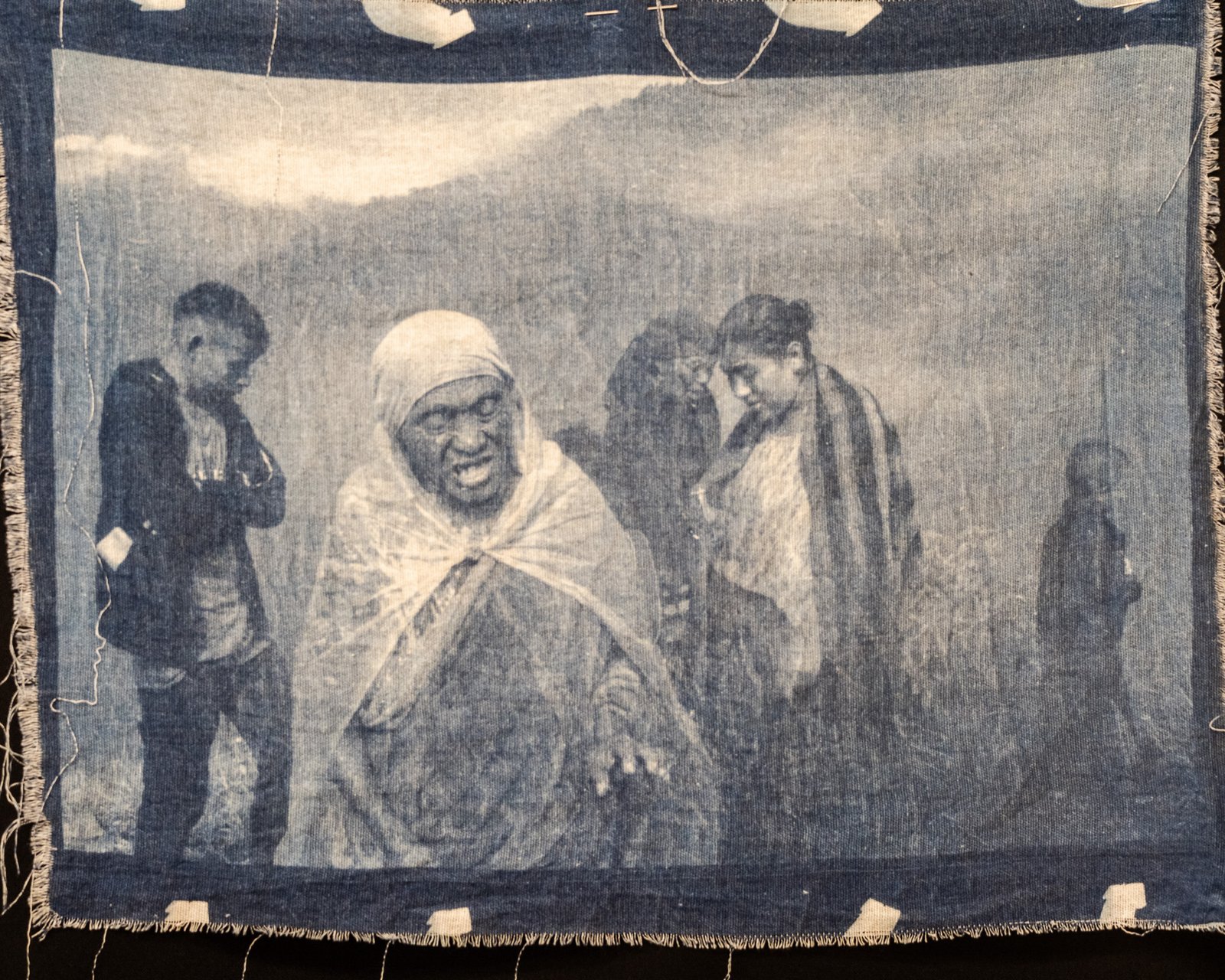
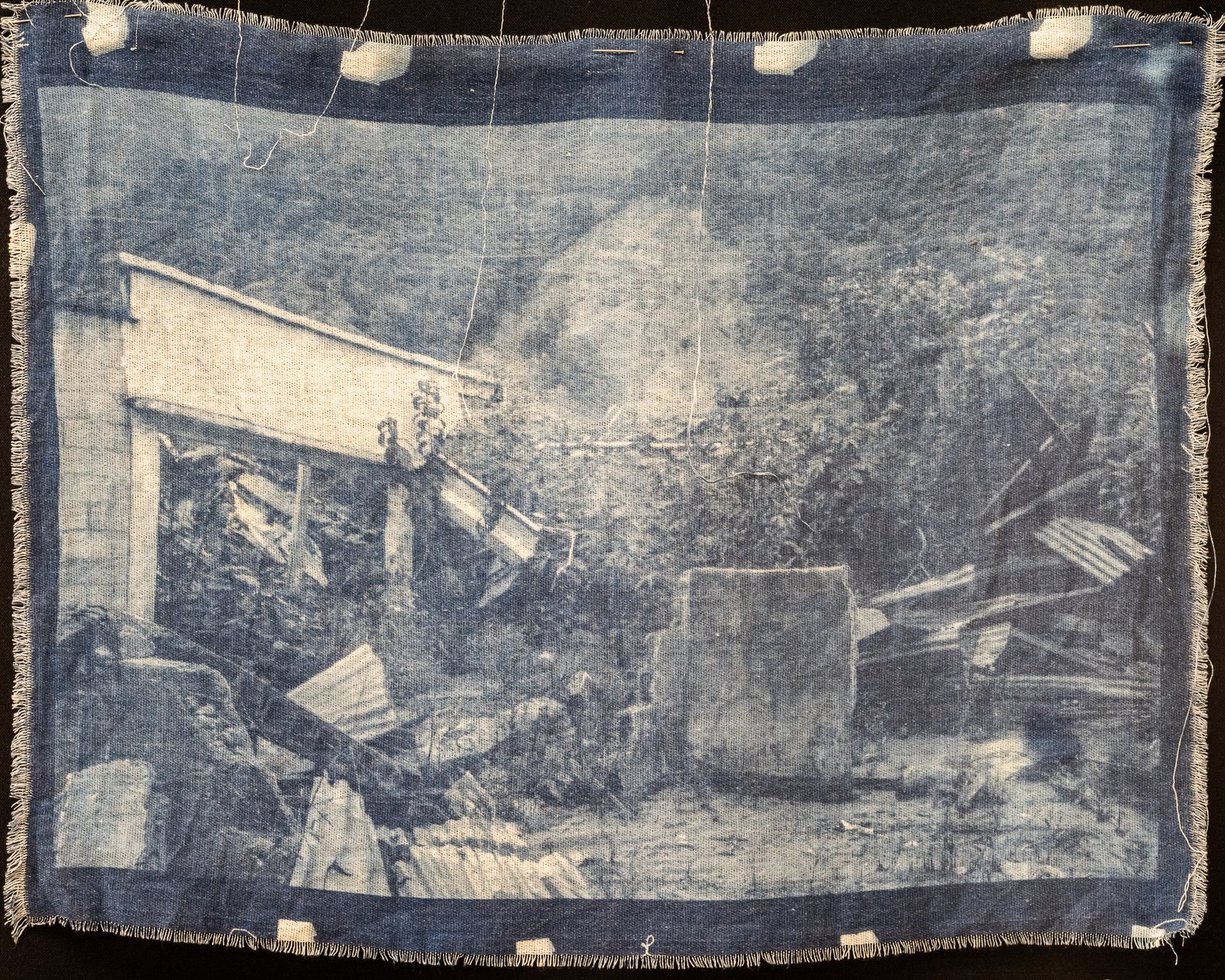
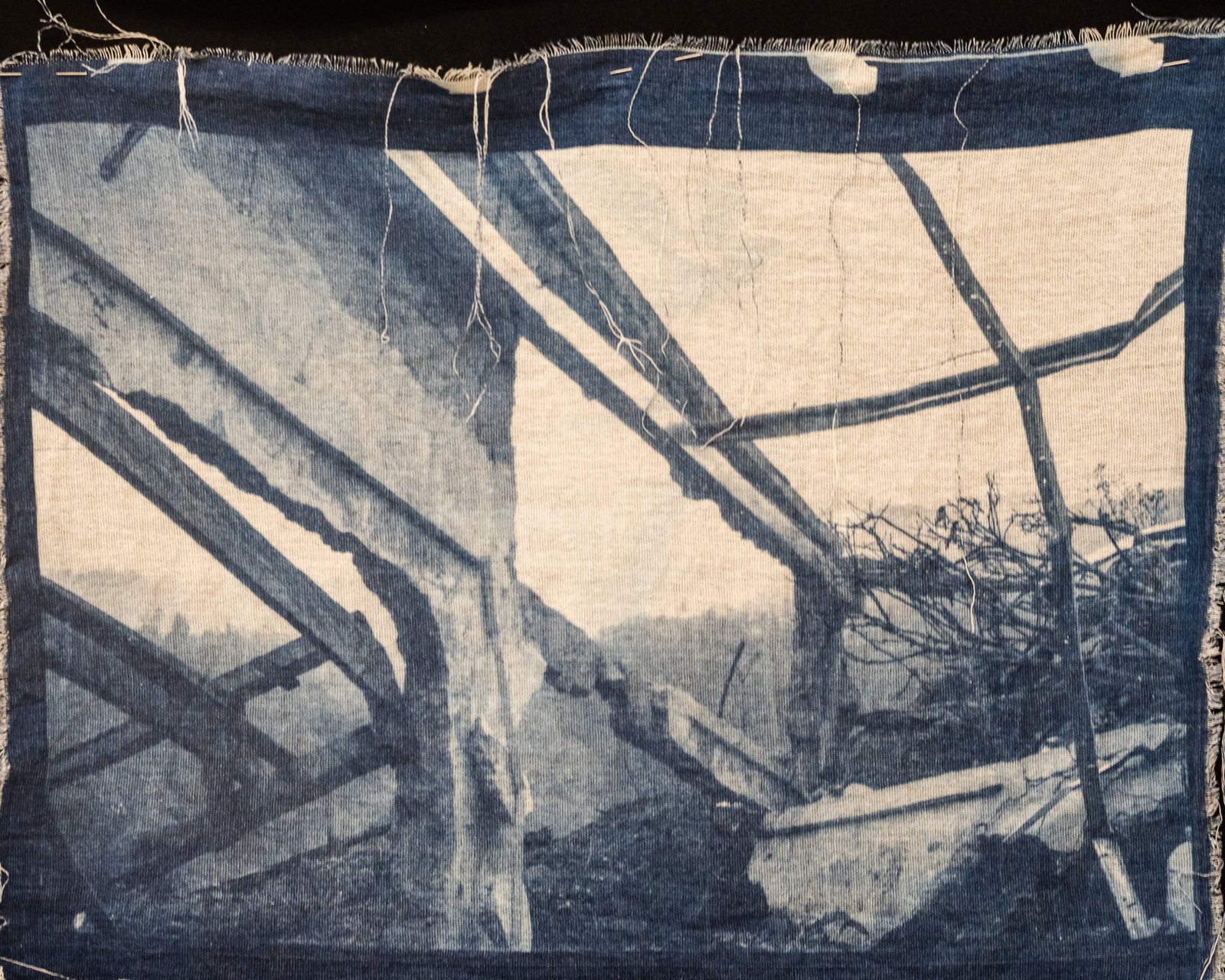
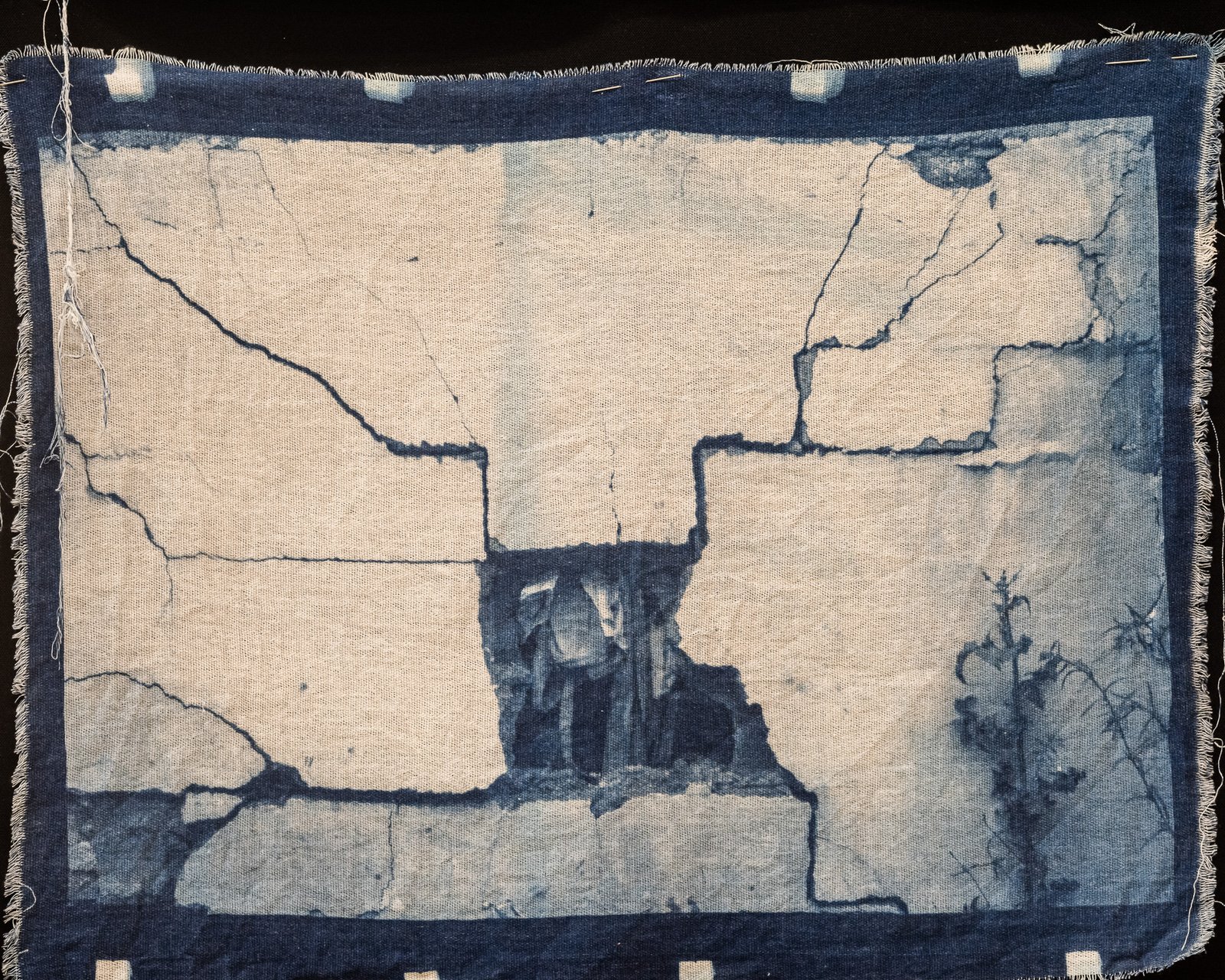
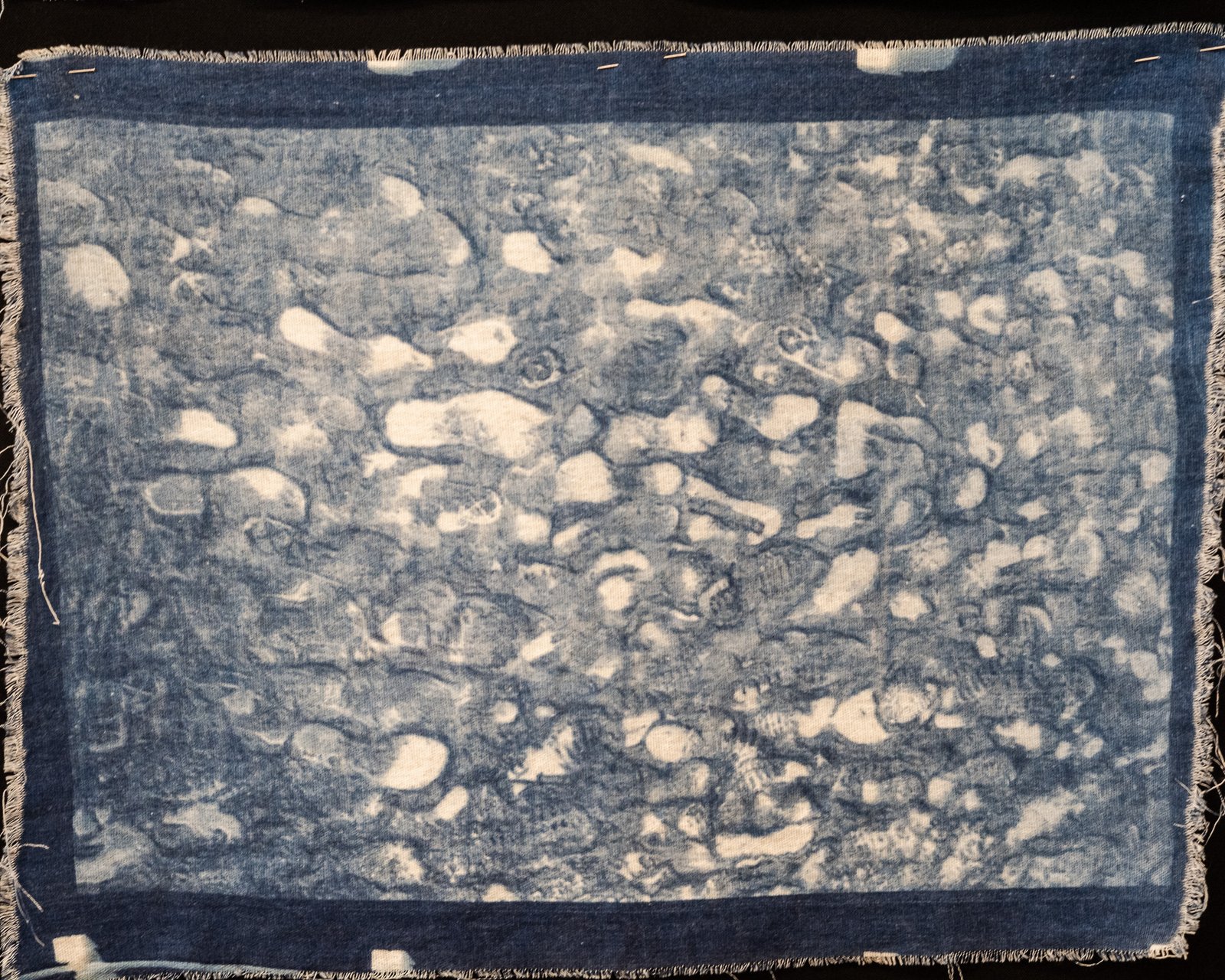
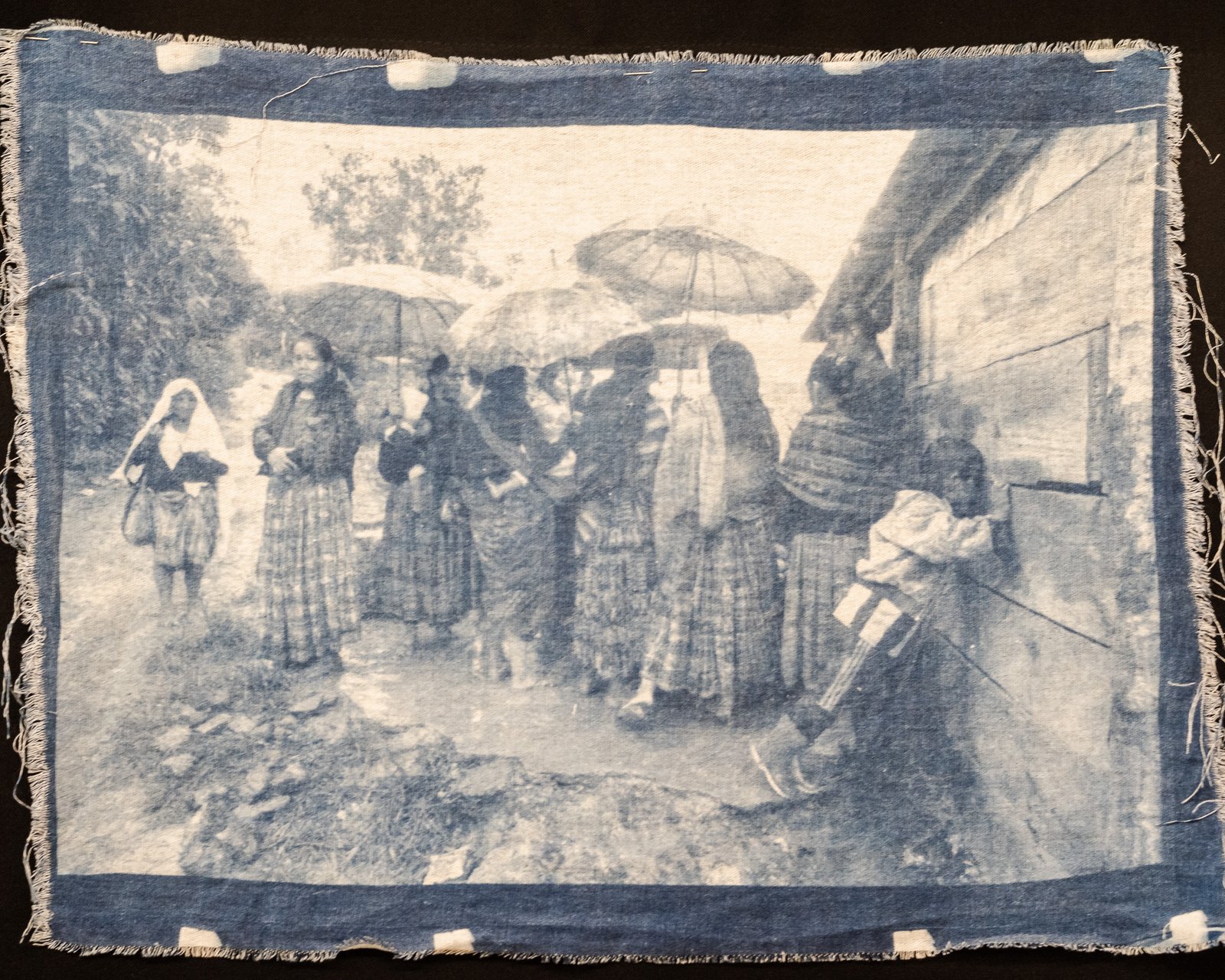
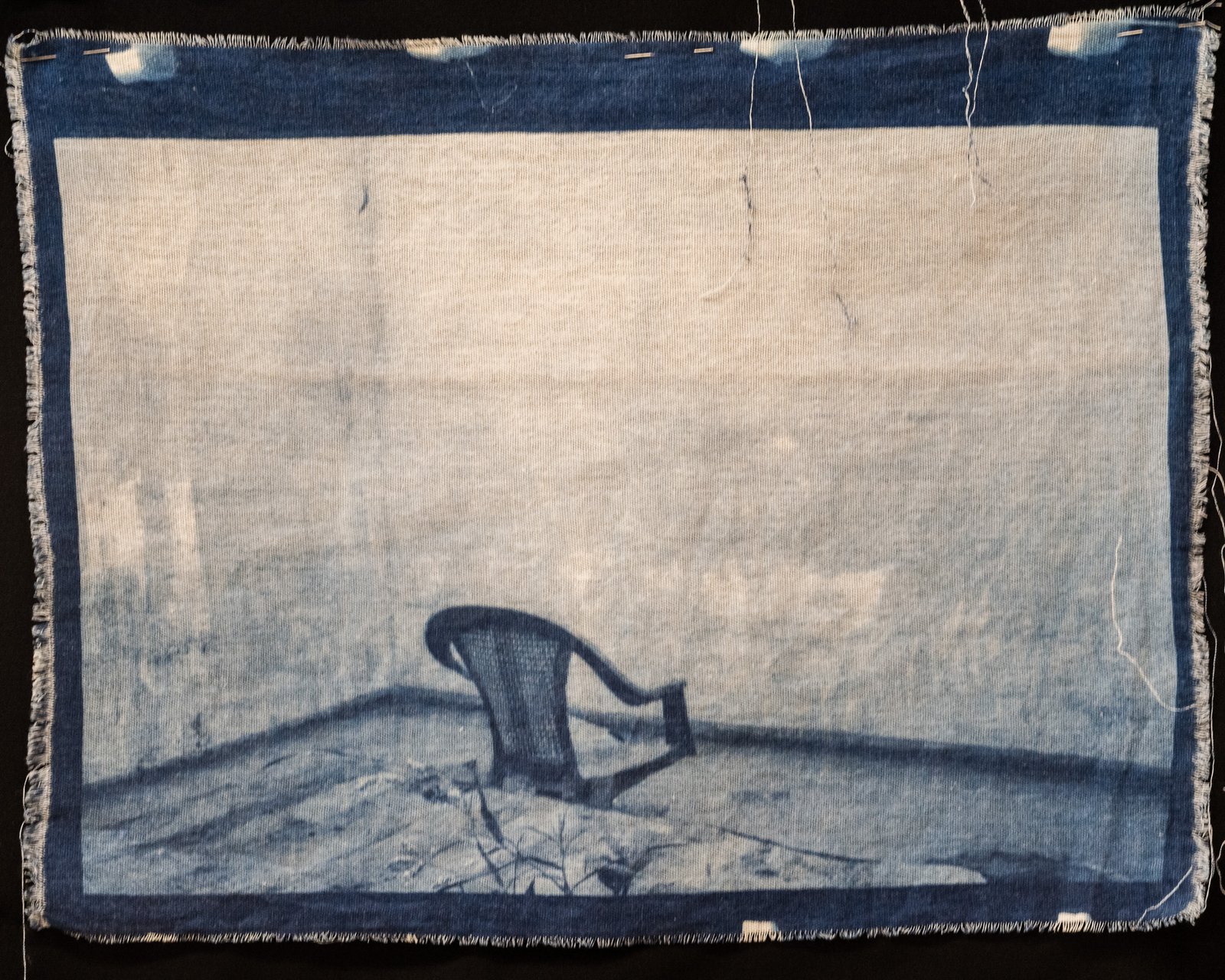
Cotton textile, coated in cyanotype chemistry and printed in direct sun on a Mexico City rooftop during a residency at Casa Lu. The cotton holds the chemistry without losing the cloth's own weight — the panels can be hung, folded, or remounted as installation conditions require.
Source images photographed in Queja, Guatemala, and the surrounding Maya highlands, 2018–2022. The community had recently survived the landslide triggered by Hurricane Eta; the work was made in the months and years after, as a way of holding the encounter in cyanotype rather than in the photograph alone. The documentary chapter lives on harveycastro.co · Los Olvidados, Guatemala ↗︎.
Twelve cyanotype panels on cotton, presented mounted onto black backing fabric and hung from a steel rod. Individual panels may also be exhibited as discrete works. The composite installation is unique; individual panels exist as small editions.
Made during a residency at Casa Lu, Mexico City, in dialogue with the broader Los Olvidados project (2018 — ongoing). Selected panels appear within Esa sombra eres tú (KOIK Contemporary, CDMX, 2023) and Echoes of Resilience (Harvey Milk Photo Center, San Francisco, 2025).