Para acá
también
vive gente.
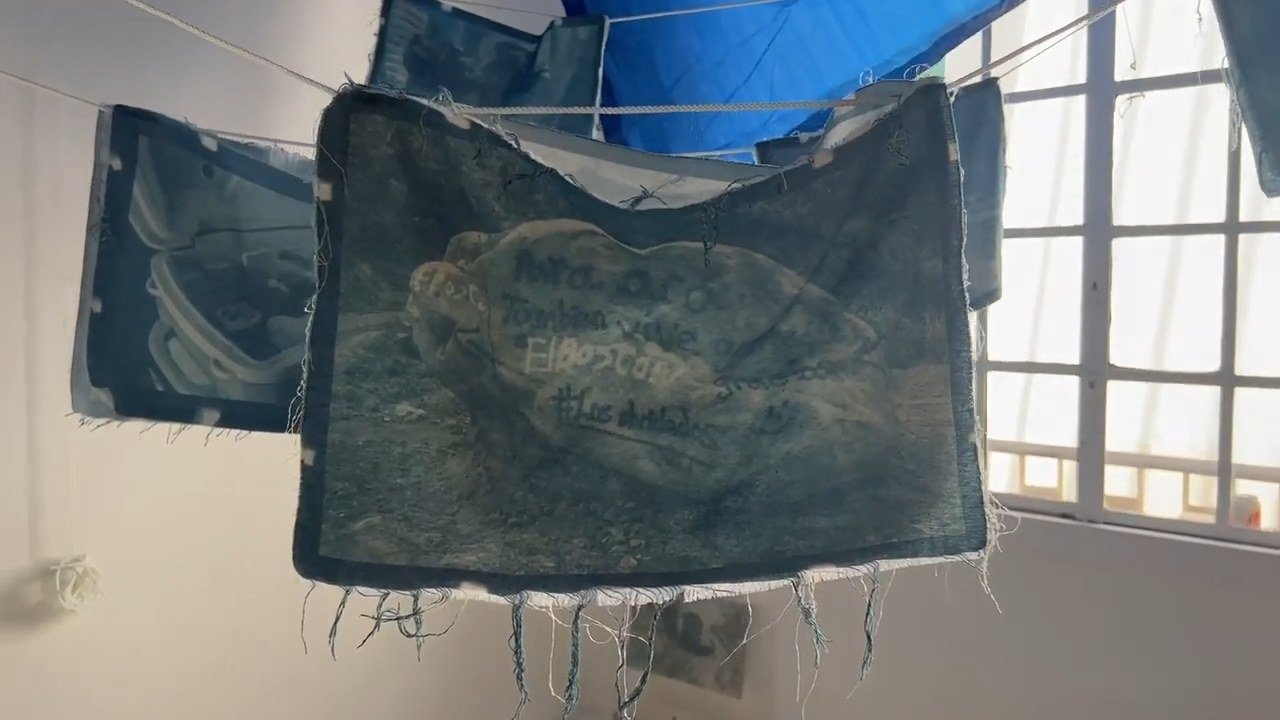
This room simulates a space inspired by the F.E.M.A.-tarp-roofed houses that remained in Puerto Rico after Hurricane María. The blue plastic tarp became roof, wall, and shroud for thousands of families through two hurricane seasons of “temporary” shelter. Under the Caribbean sun, the blue plastic cast a constant hue across every interior it covered — the defining visual condition of daily life for survivors. The installation reinstates that light. The viewer stands inside the color those families lived in.
Inside the simulated room hangs Reynaldo — a portrait from the Los Olvidados series. The cyanotypes were printed and washed on the same Mexico City rooftop where the rest of the exhibition was made, then toned with coffee — a crop tied to the island's agricultural history and the labor of the same communities documented. The cloth carries both the image and the context it came from.
An image toned with coffee, hung inside a gallery whose ceiling is lined with an actual F.E.M.A. tarp — the same material, the same light. The work does not represent the condition; it reinstates it. Source material from the Los Olvidados · Puerto Rico ↗︎ documentary chapter.
Cloth, tarp,
shelter.
Paper before
cloth.
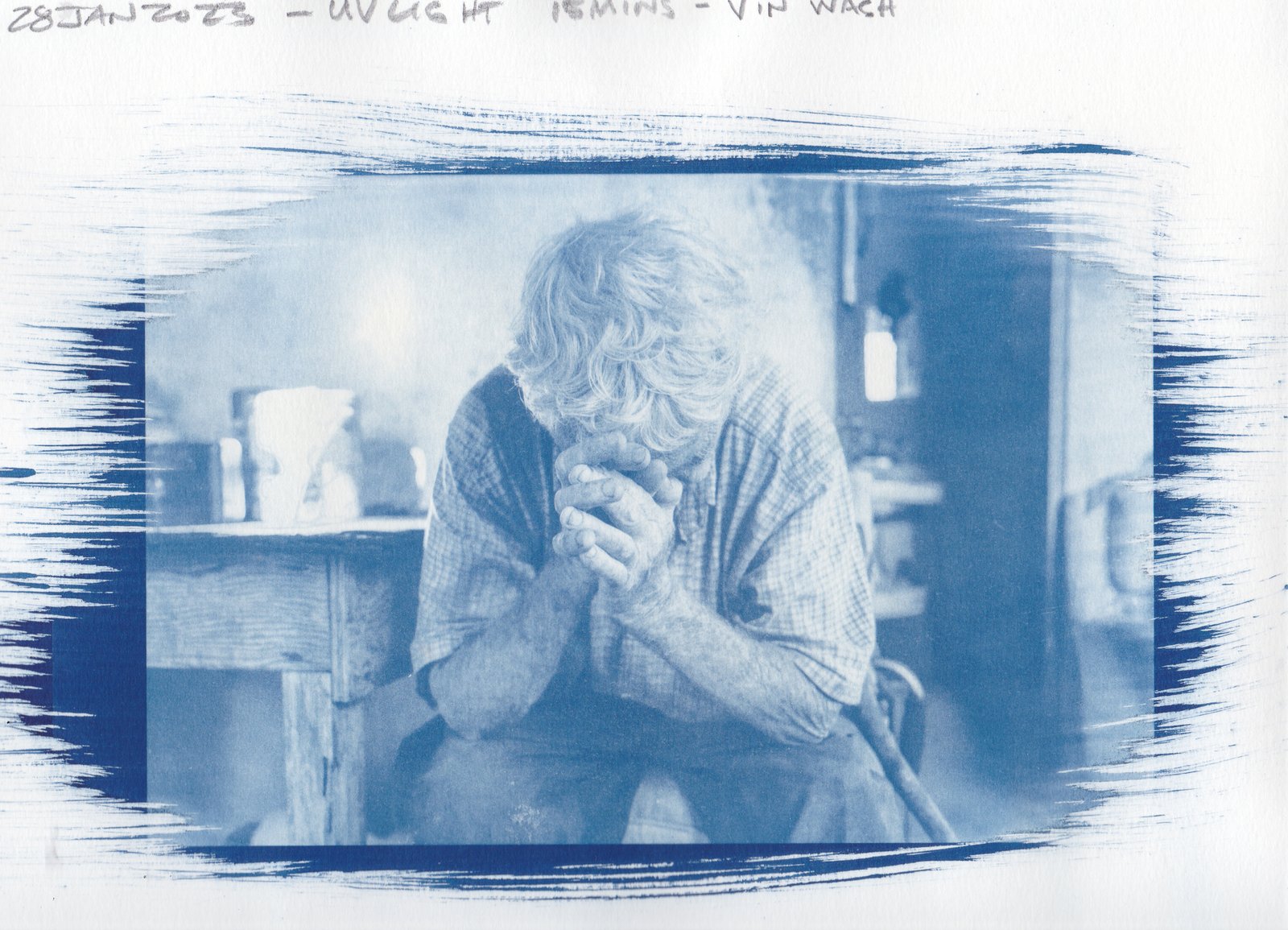
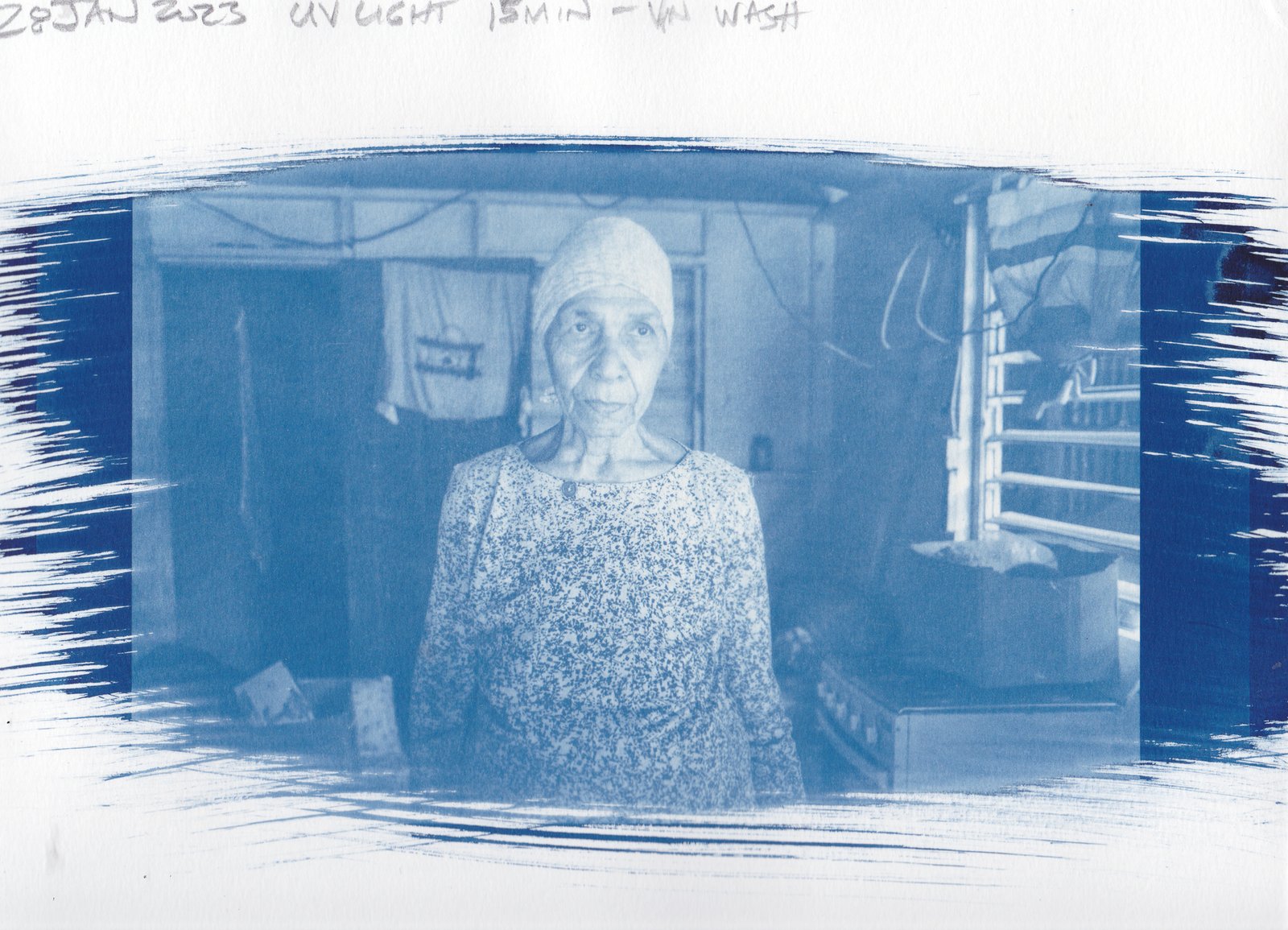
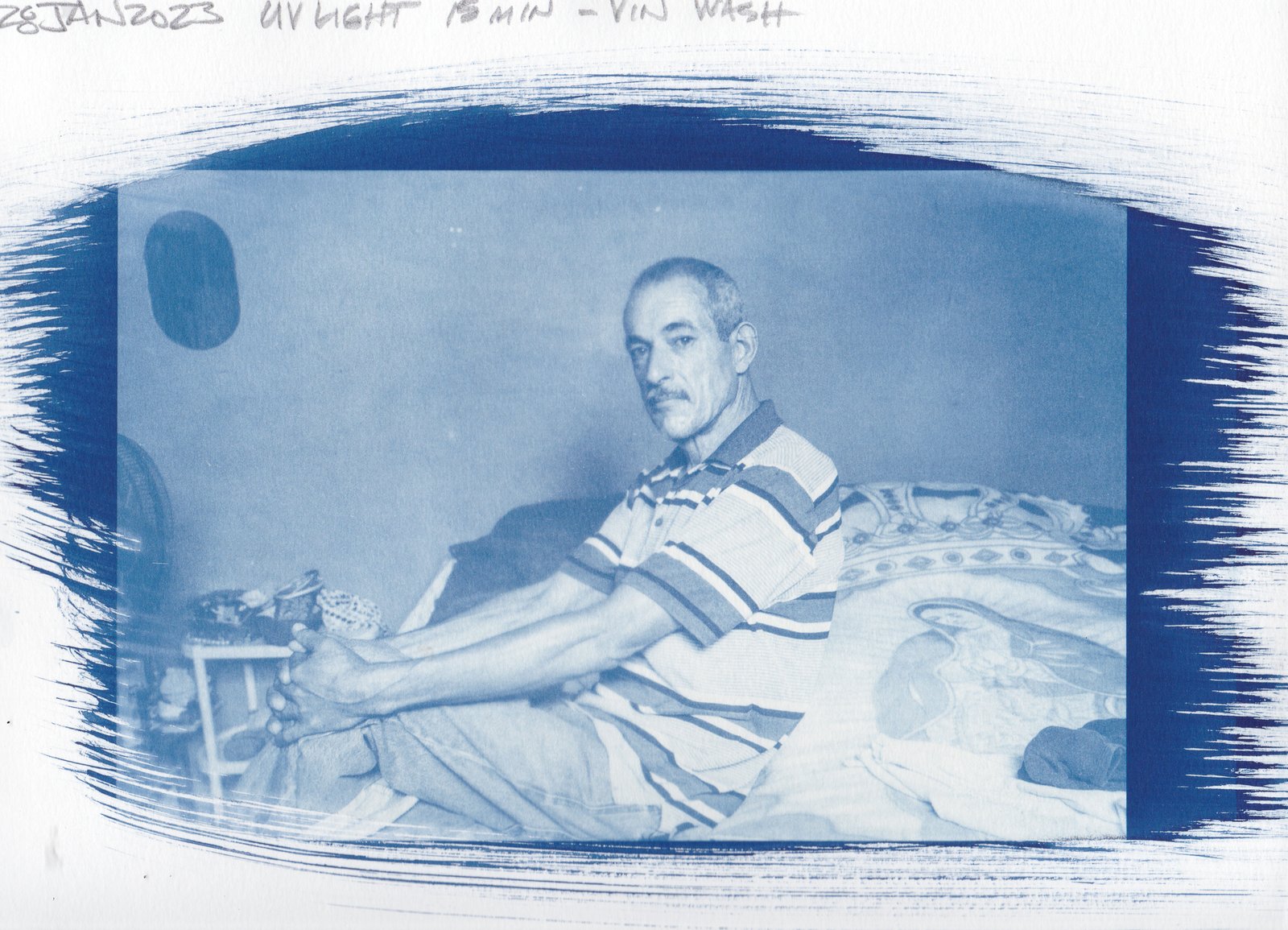
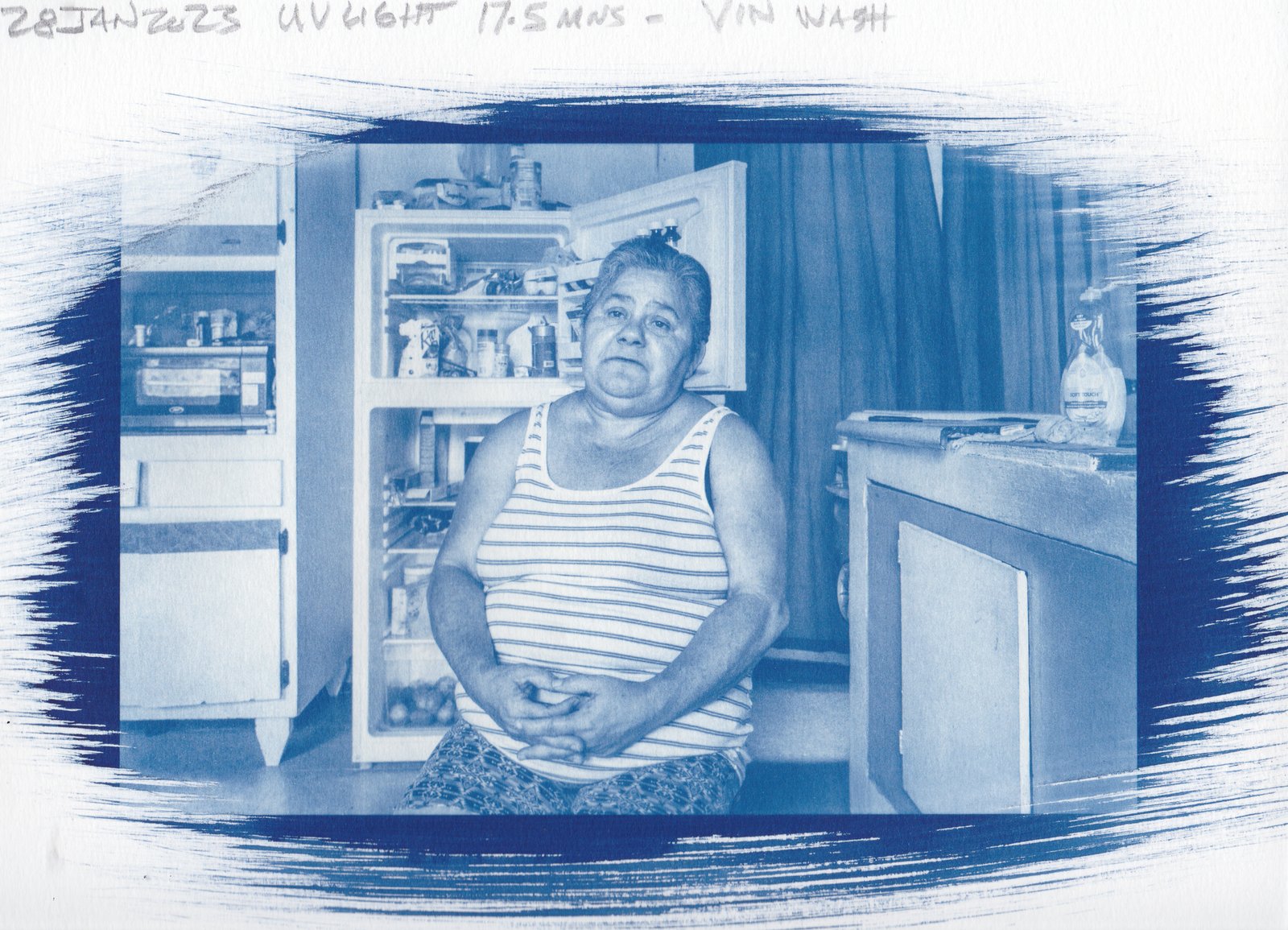
Before each large cyanotype is printed on cotton under direct sunlight, the studio makes a smaller test print on paper under a UV light. The tests carry handwritten notes — date, exposure, wash — and resolve the chemistry before it migrates to cloth. These are studio artifacts, not editioned works.
Two storms,
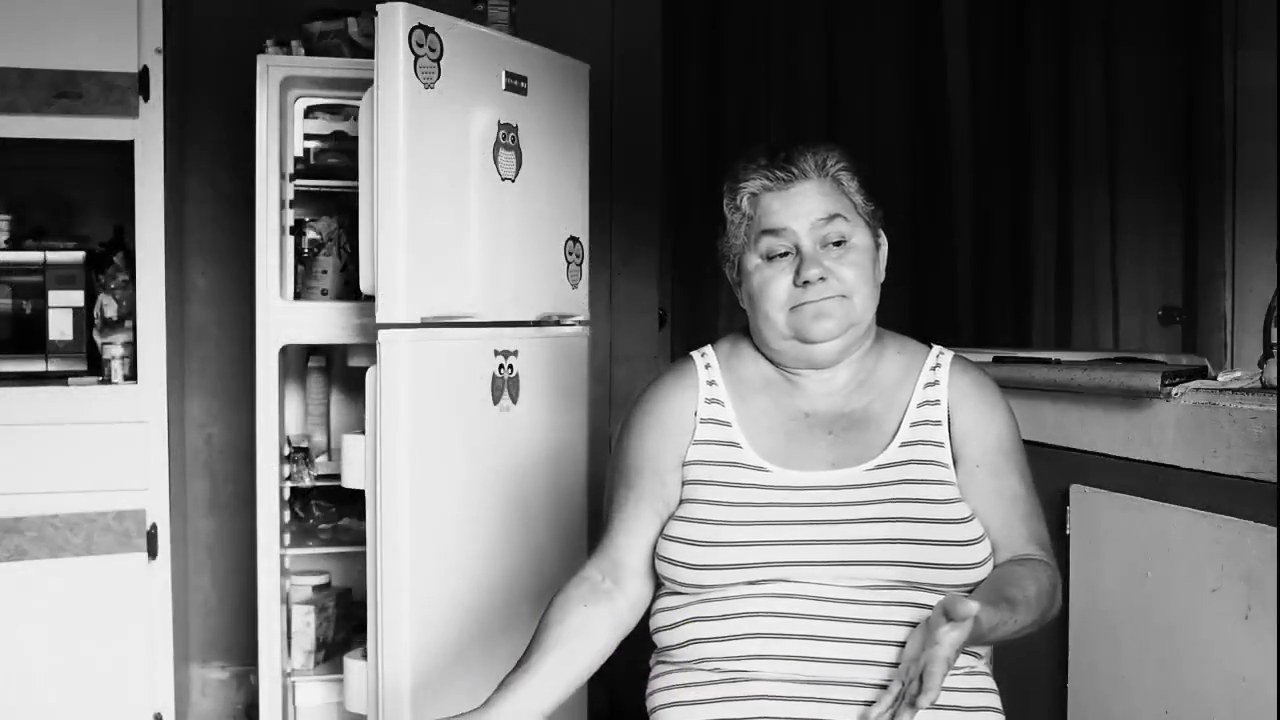
in moving image.
Continue to the
next room.
The exhibition continues with Lluvia de sangre — three installations of Guatemalan communities reshaped by hurricanes intensified by climate change.